Product Updates
LBG vs Guar Gum: Choosing the Right Hydrocolloid
Locust Bean Gum (LBG) and guar gum are both natural galactomannan hydrocolloids, and they get lumped together a lot. But they behave differently once they're in a formulation, and the right choice really does depend on what you're making.
Structural Difference
Both are galactomannans extracted from seeds, but their mannose-to-galactose ratio differs. LBG has lower galactose substitution, which lets it form stronger synergistic gels with carrageenan and xanthan gum. Guar gum doesn't share that property to the same degree.
Where LBG Has the Edge
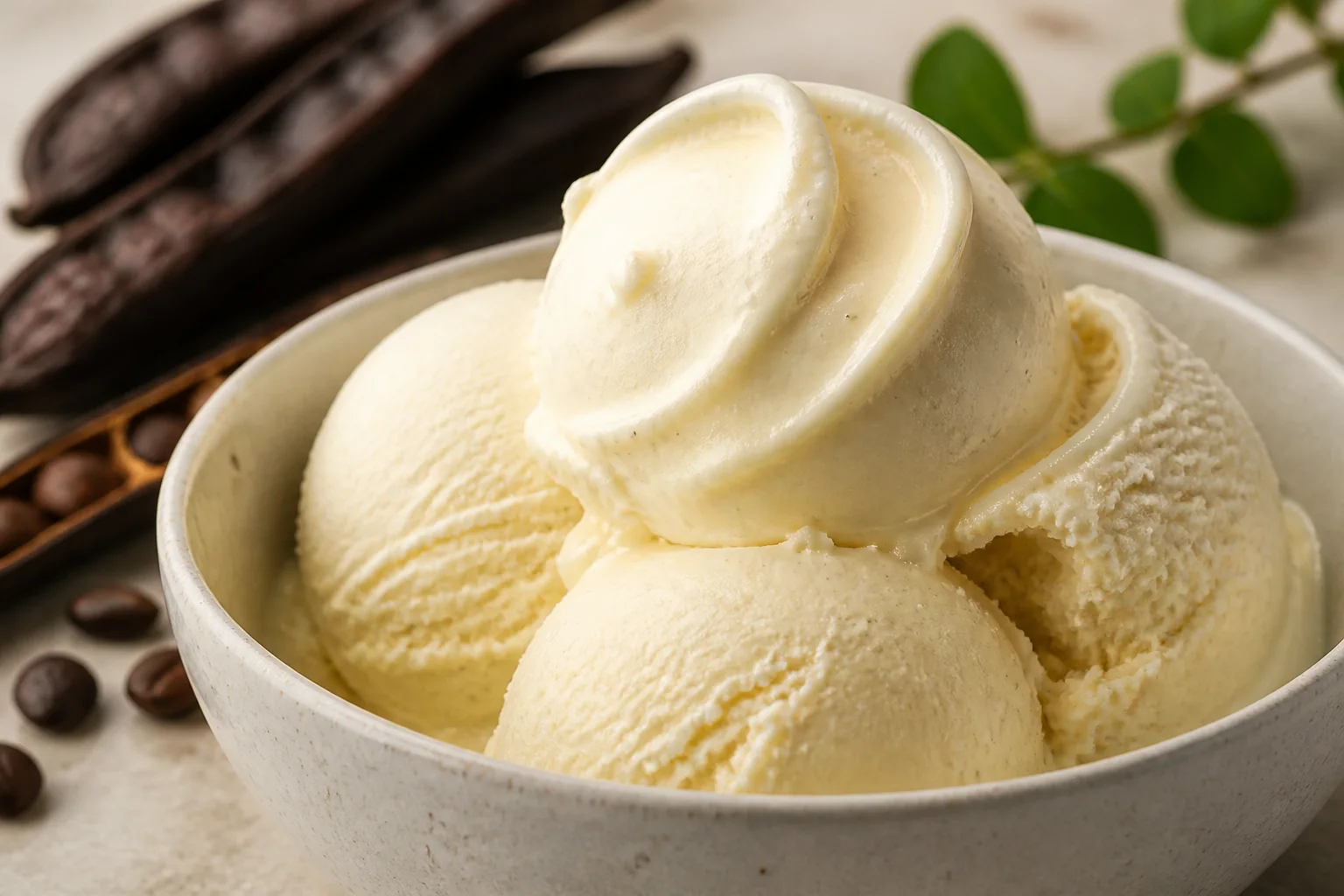
- Ice cream & frozen desserts: its freeze-thaw stability and synergy with other hydrocolloids gives a creamier, more stable structure.
- Gelled dairy desserts: LBG plus kappa-carrageenan produces elastic, clean-cutting gels that guar gum alone can't replicate.
- Clean-label positioning: LBG tends to read as a more premium, traditional Mediterranean ingredient on a label.
Where Guar Gum May Be Preferred
Guar gum hydrates faster in cold water and can be more cost-effective for simple viscosity-building jobs where you don't need synergy with other gums.
Using Them Together
In a lot of sauce and dressing formulations, the two get used together, LBG and guar gum (or xanthan gum), to balance fast cold-water hydration against long-term viscosity stability.
Need help choosing the right hydrocolloid strategy? Talk to our R&D team.
More Articles